
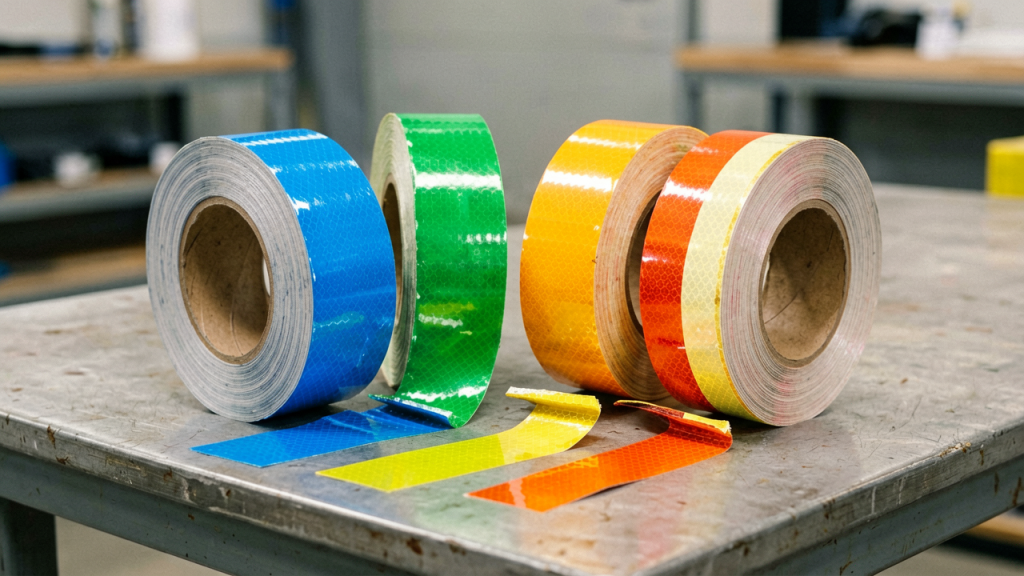
Industrial Wash Reflective Tape: A Complete Guide to Durability Standards and Applications
In industrial environments, safety isn’t just a recommendation—it’s a legal requirement and a moral imperative. When workers operate in low-light conditions, near moving machinery, or in hazardous zones, high-visibility reflective materials can be the difference between a close call and a catastrophic accident.

Industrial wash reflective tape has emerged as a critical component in workplace safety programs worldwide. Unlike standard reflective tape, industrial-grade variants are engineered to withstand extreme conditions: repeated washing cycles, chemical exposure, UV radiation, abrasion, and temperatures ranging from -40°C to 150°C.
This comprehensive guide covers everything you need to know about industrial wash reflective tape—from its construction and standards to selection criteria and real-world applications.
1. What Is Industrial Wash Reflective Tape?
Industrial wash reflective tape is a specialty safety material designed to maintain high reflectivity after repeated exposure to industrial laundering processes. It consists of three layers:
Backing Layer: Usually polyester, PVC, or specialized fabric that adheres to workwear, safety vests, or equipment surfaces. The backing must withstand high-temperature washing (typically 71°C/160°F for 30 minutes) without delaminating, shrinking, or losing adhesion.
Microprismatic Retroreflective Elements: The core technology. Unlike older glass bead-based reflectors, microprismatic elements use thousands of tiny corner-cube prisms that bounce light directly back to its source. This provides 3-5x higher reflectivity than conventional materials.
Protective Overlay: A transparent coating that shields the reflective elements from abrasion, moisture, chemicals, and UV degradation. For industrial applications, this layer is typically thicker and more chemically resistant than consumer-grade products.
2. Industrial Washing Standards: What Makes It “Industrial Grade”?
Not all reflective tape survives industrial laundering. The key differentiator is compliance with recognized standards:
EN ISO 20471: The European standard for high-visibility safety garments. It specifies minimum retroreflective material performance after 50 wash cycles at 65°C. Industrial wash reflective tape must maintain at least 70% of its initial luminous intensity coefficient (Ra value) after testing.
ASTM D6243: The American standard for evaluating retroreflective materials. It includes specific wash test protocols for industrial applications.
ANSI/ISEA 107: Defines performance classes for high-visibility apparel. Class 2 and Class 3 garments require specific amounts of retroreflective material, and that material must survive the laundering conditions of the intended use environment.
ISO 6330: Standard domestic and commercial laundry procedures. Industrial wash reflective tape products are tested according to these procedures to ensure consistent performance.
Critical Performance Metrics
| Metric | Industrial Grade | Consumer Grade |
|——–|—————–|—————-|
| Wash Cycles Survived | 50-100+ | 5-10 |
| Wash Temperature | Up to 71°C | Up to 40°C |
| Reflectivity Retention | ≥70% after 50 washes | Drops to 30-50% |
| Chemical Resistance | Oil, solvents, detergents | Limited |
| UV Degradation Resistance | 1000+ hours | 200-500 hours |
3. Types of Industrial Wash Reflective Tape
Heat Transfer Reflective Tape
Applied using heat and pressure, heat transfer reflective tape creates a permanent bond with the substrate. This method is ideal for:
- Textile-based workwear
- Flexographic printing applications
- High-volume manufacturing
Heat transfer application ensures uniform bonding across the entire surface area, eliminating edge lifting—a common failure point in adhesive-applied tapes.
Self-Adhesive Industrial Reflective Tape
Features a pressure-sensitive acrylic adhesive backed by release liner. Suitable for:
- Equipment marking and identification
- Hard surface applications (machinery, vehicles)
- Temporary safety markings
For industrial applications, the adhesive must resist oil, grease, and cleaning solvents while maintaining bond strength through thermal cycling.
Sew-On Reflective Tape
A fabric-backed tape designed to be sewn onto garments. This is the most traditional method and offers:
- Excellent durability through repeated washing
- No heat or adhesive requirements
- Easy replacement during garment repair
4. Applications Across Industries
Industrial wash reflective tape serves a wide range of sectors:
Manufacturing and Warehousing
Workers in warehouses, factories, and distribution centers need high visibility around forklifts, conveyor systems, and heavy machinery. Reflective tape on vests, sleeves, and pants ensures workers are visible from 300+ meters in low-light conditions.
Oil and Gas
In petrochemical facilities, workers face additional challenges: oil contamination, chemical exposure, and potential ignition sources. Industrial wash reflective tape used in these environments must be flame-resistant and chemically inert.
Mining
Underground mining operations require reflective materials that can withstand extreme abrasion, moisture, and impact. Reflective tape on helmets, vests, and equipment provides critical visibility in tunnels and shafts.
Transportation and Logistics
Fleet workers, dock operators, and rail yard personnel all depend on reflective materials that survive daily washing and harsh outdoor exposure. Industrial wash reflective tape on uniforms and vehicle markings reduces strike-by incidents.
Emergency Services
Firefighters, police, and EMS personnel wear industrial wash reflective tape on turnout gear and uniforms. These materials must survive hundreds of wash cycles while maintaining reflectivity in life-critical situations.
5. Colourful Reflective Fabric Integration
Modern safety workwear increasingly combines colourful reflective fabric with industrial wash reflective tape to achieve both high visibility and brand identity.
Traditional fluorescent yellow-green remains the dominant background color for maximum contrast. However, many companies now use fluorescent orange, red, blue, or green backgrounds paired with silver or colored reflective stripes. This allows organizations to maintain safety compliance while expressing corporate identity.
Colourful reflective fabric options include:
- Fluorescent orange-red with silver reflective strips
- Fluorescent yellow with orange reflective strips
- Custom color combinations for brand matching
- Multi-tone designs for enhanced visual interest
The key challenge is ensuring that the colorful background fabric itself survives industrial laundering without fading or shrinking, while the reflective elements maintain their performance.
6. Reflective Fabric for PPE Integration
Beyond tape, reflective fabric for PPE applications has expanded significantly. Full panels of retroreflective material can be incorporated into safety garments, providing 360-degree visibility.
Reflective fabric for PPE applications include:
- Full-body safety suits for confined space entry
- Reflective背 panels on firefighter turnout gear
- Reflective strips on hard hat brims
- Reflective patches on glove backs
- Integrated reflective lining in safety boots
When selecting materials, consider the complete garment lifecycle: manufacturing, shipping, storage, use, laundering, and eventual disposal. Reflective fabric for PPE must perform throughout this entire lifecycle.
7. Installation and Application Methods
Proper installation is critical for maximizing the service life of industrial wash reflective tape:
Surface Preparation
- Clean surfaces thoroughly with isopropyl alcohol or recommended cleaner
- Remove all oil, grease, dust, and old adhesive residue
- Ensure surface temperature is between 15°C and 35°C during application
- Dry surfaces completely before applying tape
Application Techniques
- Use calibrated heat press for heat transfer application (typically 130-150°C, 15-30 seconds)
- Apply uniform pressure across entire tape width
- Allow cooled-down before subjecting to stress or washing
- For self-adhesive tapes, use roller to eliminate air pockets
Quality Verification
- Visual inspection for bubbles, wrinkles, or incomplete bonding
- Peel test to verify adhesion strength
- Reflectivity measurement with calibrated meter
8. Maintenance and Replacement Guidelines
Even the best industrial wash reflective tape requires monitoring:
Inspection Schedule
- Weekly visual inspection during active use
- Monthly detailed inspection for edge lifting, cracking, or discoloration
- After any incident involving chemical exposure or physical damage
Cleaning Procedures
- Use mild detergent and warm water for routine cleaning
- Avoid abrasive cleaners, solvents, or high-pressure washing
- Air dry at room temperature; avoid direct high heat
Replacement Triggers
Replace reflective tape when:
- Reflectivity drops below 150 cd/lx/m² (EN ISO 20471 minimum)
- Visible cracks, peeling, or delamination occurs
- Edge lifting exceeds 10% of total tape area
- Background fabric is damaged beyond repair
9. Cost Analysis: Total Cost of Ownership
While industrial wash reflective tape costs 2-5x more than consumer-grade alternatives, the total cost of ownership tells a different story:
| Factor | Consumer Grade | Industrial Grade |
|——–|—————|—————–|
| Initial Cost | $1.00/m | $3.50/m |
| Lifespan (wash cycles) | 10-15 | 50-100+ |
| Cost per wash cycle | $0.07-$0.10 | $0.03-$0.07 |
| Replacement labor cost | Frequent | Infrequent |
| Safety incident risk | Higher | Lower |
Over a 2-year deployment, industrial grade typically proves 40-60% more economical when factoring in replacement labor and reduced safety risk.
10. Choosing the Right Product
When selecting industrial wash reflective tape, consider:
Application Environment: Indoor warehouse vs. outdoor mining vs. chemical plant—all require different specifications.
Substrate Material: Fabric, metal, plastic, or composite surfaces each need specific adhesive or attachment methods.
Regulatory Requirements: Know which standards apply to your industry and region.
Washing Frequency: Daily industrial laundering vs. weekly commercial washing vs. occasional home washing.
Budget Constraints: Balance initial cost against expected lifespan and safety requirements.
Conclusion
Industrial wash reflective tape is far more than a strip of shiny material—it’s a critical safety investment that protects workers across countless industries. Understanding its construction, standards, and proper application ensures you get maximum protection and value.
Whether you’re specifying industrial wash reflective tape for new safety garments, upgrading existing workwear, or designing a comprehensive high-visibility program, the principles remain the same: choose materials that meet or exceed applicable standards, apply them correctly, and maintain them regularly.
The cost of quality reflective tape is always less than the cost of a preventable accident.
Related Reading
- Industrial Wash Reflective Tape: Performance Standards and Durability Testing
- Heat Transfer Reflective Tape: The Smart Choice for Custom Safety Apparel
- Reflective Fabric for PPE: The Future of Personal Protective Equipment
- FR Reflective Tape: A Practical Guide to Choosing Fire-Resistant Solutions
- Colourful Reflective Fabric: Making High-Visibility Safety Workwear Smarter
- Industrial Wash Reflective Tape: Why Durability Is the Core Requirement
- Colourful Reflective Fabric: Building Safer Workwear Through Smart Design Choices